
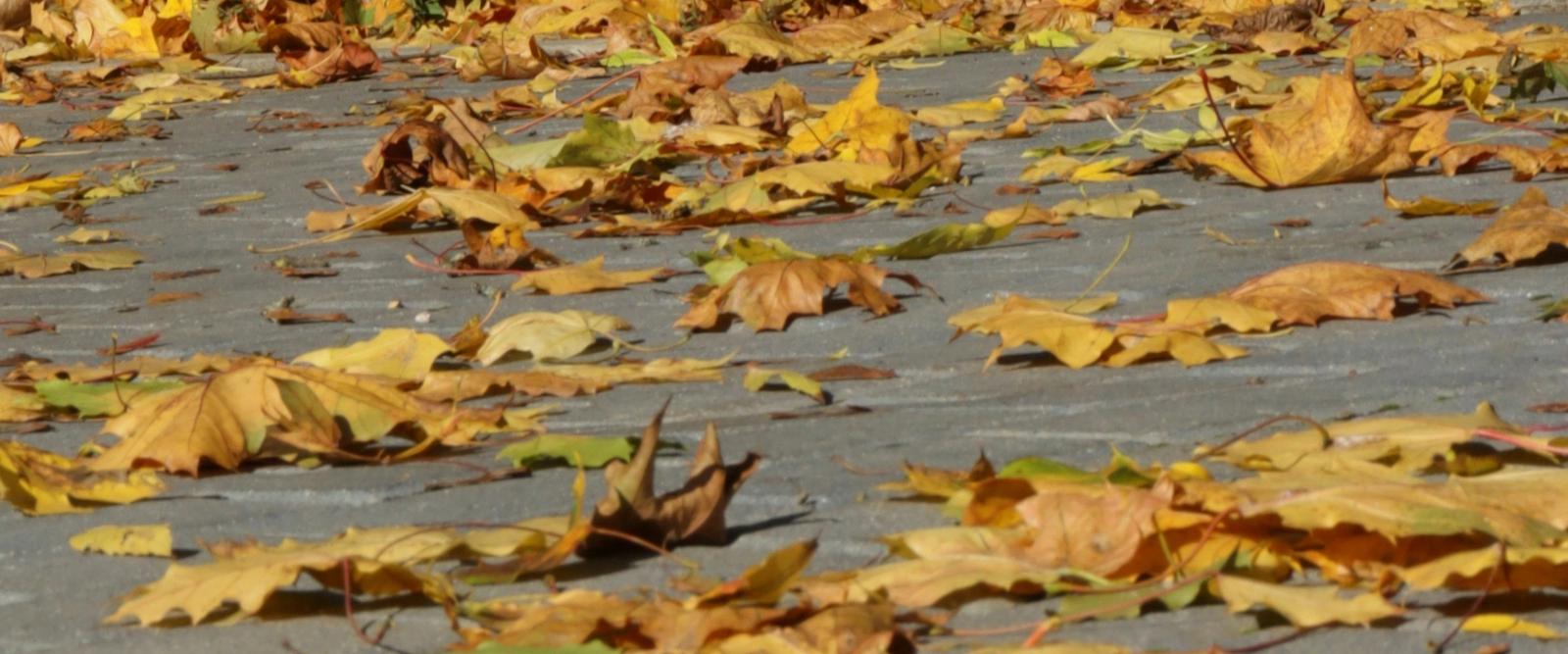
Autumn is the best season for dog walking in Somerset. The light goes golden, the woods smell of damp earth and leaf mould, and the footpaths are quieter than they've been since March. The summer heat that kept you walking at dawn and dusk is gone, and the deep winter mud hasn't yet arrived. If there's a sweet spot in the dog-walking calendar, this is it.
But autumn brings its own hazards: some of them seasonal, some of them specific to Somerset. As someone who walks dogs across Taunton and the surrounding countryside every day, I know these paths in every season, and October is when a few specific things need paying attention to. This guide covers the hazards worth knowing about, the walks that work best in autumn, and the gear that makes the difference between a lovely walk and a cold, wet, stressful one.
For the full list of walking routes around town (most of which are at their best in October), see the top 10 dog walking spots in and around Taunton. And if you're looking for a walker to do the autumn legwork for you, my solo walks and group walks cover all the routes below.
1. Why autumn is brilliant for Somerset dog walking
The light, the colours, the empty paths: there's a lot to love. The Quantocks in October, with the bracken turning bronze and the views sharpening as the haze clears, are spectacular. The Blackdown Hills, with their wooded valleys full of turning leaves, are quieter than at any other time of year. Even the town walks (Vivary, Longrun, French Weir) take on a different character when the trees change colour and the air has that particular autumn bite.
It's also a comfortable temperature for dogs. No risk of overheating on a midday walk. No frozen ground to crack paw pads. Just cool, fresh air and soft ground underfoot. For dogs with thick coats or flat faces (the breeds that struggle most in summer), autumn is a relief.
2. Acorns and conkers: more dangerous than they look
Acorns and conkers are two of the most common autumn hazards, and they're everywhere in Somerset from late September onwards. Both contain toxins that can cause vomiting, diarrhoea, and in significant quantities, more serious issues. Acorns contain tannins that are toxic to dogs in large amounts. Conkers contain aesculin, which is also toxic. Both can also cause intestinal blockages if swallowed whole, particularly in smaller dogs.
The risk from a single acorn is low (most dogs who snaffle one will be fine), but a dog who treats fallen acorns like a snack bar while you walk through an oak-lined path can ingest enough to cause problems. If your dog is a dedicated scavenger, autumn is the season for "leave it" to earn its keep. The paths through Thurlbear Wood and the wooded sections of Longrun Meadow are particular hotspots.
3. Seasonal Canine Illness (SCI): what it is and where it's been reported
Seasonal Canine Illness is a poorly understood condition that affects dogs in autumn, typically between August and November, most commonly in September. The symptoms (vomiting, diarrhoea, lethargy, and in severe cases, collapse) appear within 24 to 72 hours of walking in woodland. The cause still isn't fully understood despite years of research. A possible link with harvest mites has been suggested by the Animal Health Trust's research, but no cause has ever been confirmed. Treating your dog with a vet-recommended fipronil spray before woodland walks is sometimes advised as a precaution.
Cases have been reported across the UK, with clusters in certain woodland areas. Somerset hasn't been a major hotspot, but SCI has been reported in woodland across the South West, and the responsible approach is awareness without alarm. If your dog shows sudden onset of vomiting, diarrhoea, or unusual lethargy within three days of a woodland walk, call your vet immediately and mention where you walked. Early treatment is effective. Waiting to see if they improve is the wrong move with SCI.
4. Shorter days: walking safely in low light
The clocks go back at the end of October, and suddenly your evening walk is in the dark. Morning walks too, if you go early enough. Walking a dog in low light isn't inherently dangerous, but it needs a few adjustments.
Your dog needs to be visible. A reflective collar or a lightweight LED tag makes a real difference, not just for you but for cyclists and other path users. If your dog is off-lead and dark-coloured, a flashing LED on their collar is the difference between knowing where they are and squinting into the gloom hoping for the best. For you, a head torch leaves both hands free for lead handling and is genuinely more useful than a handheld torch.
Stick to routes you know well. An unfamiliar path in the dark is harder to navigate and easier to trip on. The surfaced paths in Vivary Park and the tarmac section of Longrun Meadow from Silk Mills are the most straightforward low-light options close to town.
5. Mud: which local walks hold up best
Somerset is wet. By October, the ground is softening, and by November, some paths are properly muddy. The woodland walks (Thurlbear, Netherclay, Castle Neroche, Otterhead) are the first to turn. If you're walking in real woodland, accept that you're coming back muddy and plan accordingly.
The walks that hold up best in autumn are the ones with hard surfaces. Vivary Park's tarmac paths. The riverside path at Longrun Meadow. The upper path at French Weir Park. Cothelstone Hill and the Quantocks have enough drainage that they stay walkable well into autumn, though the car park can get boggy. For a guaranteed mud-free surface, the enclosed dog fields near Taunton offer a dry, secure alternative when every public path in Somerset is underwater.
6. Fungi: why "leave it" matters more in autumn
Autumn is fungus season, and Somerset's woodlands produce a spectacular variety. Most are harmless, but a few (death cap, destroying angel, fly agaric) can cause serious illness or death if eaten by a dog. The problem is that dogs don't know which mushrooms are safe, and the toxic ones don't look obviously dangerous. A small, plain white mushroom could be harmless or lethal, and you won't know by looking at it.
The safest approach is to treat all wild mushrooms as off-limits. If your dog is a scavenger, keep them on lead through woodland in autumn, or at least keep your eyes on the path ahead. A solid "leave it" cue is worth its weight in gold from September through November. If your dog eats an unknown mushroom, take a photo of it and call your vet immediately; identification matters for treatment.
7. Grass seeds: late-season risk
Grass seeds are mostly a summer problem, but they persist into early autumn, particularly in long grass on the edges of paths and in meadows. The danger is the same: the barbed seed works its way into a dog's coat, then into the skin, often between toes, in ears, or in armpits, where it can cause painful abscesses that require surgical removal.
Check your dog's paws, ears, and armpits after every walk through long grass, even in October. A seed that's caught in the fur is easy to remove. One that's worked its way under the skin is a vet visit. If your dog suddenly starts shaking their head, licking a paw obsessively, or develops a small, painful swelling between their toes, a grass seed is the most likely culprit, even late in the season.
8. Wildlife: deer rutting season
October is the red deer rut, and the Quantocks and Blackdown Hills have wild deer populations. A stag in the rut is a very different proposition from the deer you see quietly grazing in summer. They're aggressive, unpredictable, and territorial. A dog who chases deer at any time of year is a problem; a dog who chases a rutting stag in October is a potentially life-threatening one, for the dog.
Keep dogs on lead or under very close control in deer areas during October. If you see a stag, change direction. Do not let your dog approach, and do not assume the stag will run away. He might. Or he might not. The risk-reward calculation on a deer encounter in the rut doesn't favour the dog.
October also marks the start of the pheasant shooting season (1 October to 1 February). If you're walking in the Quantocks or Blackdown Hills, stick to public footpaths, keep your dog close on shoot days, and check local shoot dates if you can.
9. The best autumn walks near Taunton
Every walk has its season, and the ten routes in the main walking spots guide shift in character as the season changes. In autumn, these are the standouts:
The Quantocks (Cothelstone Hill and Lydeard Hill). The bracken turns the hillsides bronze, the views open up as the haze clears, and the cooler weather means you can walk at midday without overheating. Keep dogs close around livestock and deer.
Hestercombe Gardens. The formal gardens are beautiful in autumn colour, and the woodland walks are full of turning leaves. The café is still open for a post-walk coffee, and dogs are welcome on a short lead in the gardens and woodland, with outdoor café seating only (note: the site changed hands in 2025 — check current opening before visiting).
Vivary Park. The trees along the main avenue turn properly golden, and the surfaced paths mean you're not fighting mud. Combine with a coffee from The Coffee Station and you've got the perfect low-effort autumn morning.
Longrun Meadow. The riverside trees are at their best in late October, and the flat path is walkable in almost any weather. It's also one of the safer low-light options for evening walks.
10. Gear for autumn: what a professional dog walker carries in October
By October, my walk bag has shifted from summer mode to autumn mode. Here's what's in it. A head torch and spare batteries (the evening walks are in the dark before the month is out). A reflective vest and an LED collar attachment for dogs who are walked in low light. A towel (not the nice one from the bathroom; an old one that lives in the car and deals with mud). A collapsible water bowl and a bottle of water (autumn is cooler but dogs still drink). A basic first aid kit: tick remover, sterile wipes, a bandage, antihistamine (discussed with the dog's owner beforehand). And a spare lead, because leads break at the worst possible moments.
For you: waterproof walking boots, not trainers. Somerset in October is wet underfoot even when it's not raining. A waterproof coat that you can move in. And a flask of something hot in the car, because the post-walk drive home is better with tea.
Practical Tips for Autumn Dog Walking
The paw-check routine. After every autumn walk, check paws for grass seeds, mud between toes, and any cuts or thorns. It takes thirty seconds and catches problems before they become vet visits.
The towel-and-boot-wash system. Towel by the back door. Old towel in the car. If you have an outside tap, a quick paw rinse before the dog comes indoors saves your floors. In a perfect world, you have a boot wash installed. In the real world, a bucket of water by the back door does the job.
Adjust walk times to the light. As the days shorten, the window for daylight walks narrows. If you normally walk at 6pm, by late October that's a walk in the dark. Shift to lunchtime where you can, or embrace the head torch.
Don't skip the wet walks. A wet autumn walk followed by a warm pub with a dog at your feet is one of life's genuine pleasures. The dog-friendly eating and drinking guide has all the Taunton spots that welcome muddy dogs and their owners. And if the weather truly turns against you, my indoor enrichment guide has ten ways to tire your dog out without setting foot outside.
Want someone else to do the autumn walking?
Hi, I'm Emma, the dog walker and trainer behind Dogs and Fairy Tails, based in Taunton. I offer solo walks and group walks across Taunton and the surrounding countryside. Autumn is my favourite season to be out walking, and my routes change with the conditions. I'm BSc Animal Behaviour qualified, fully insured, DBS checked, and I compete at Crufts in Heelwork to Music and Agility. Whether it's a crisp October morning or a wet November afternoon, your dog gets a proper walk, a thorough towel-dry, and home settled and happy.
Book a free meet and greet and we'll find the right walks for your dog this autumn. Or if you'd like to know more about me first, here's the about page.